 Polski

Rat cages & buying a rat cage – spacious, safe, and smartly designed


- Voor 17 uur besteld, dezelfde dag verzonden!
- Rodent specialist since 2011
- Dispatched from our own stock
Buying a rat cage: spacious, safe, and smart to furnish
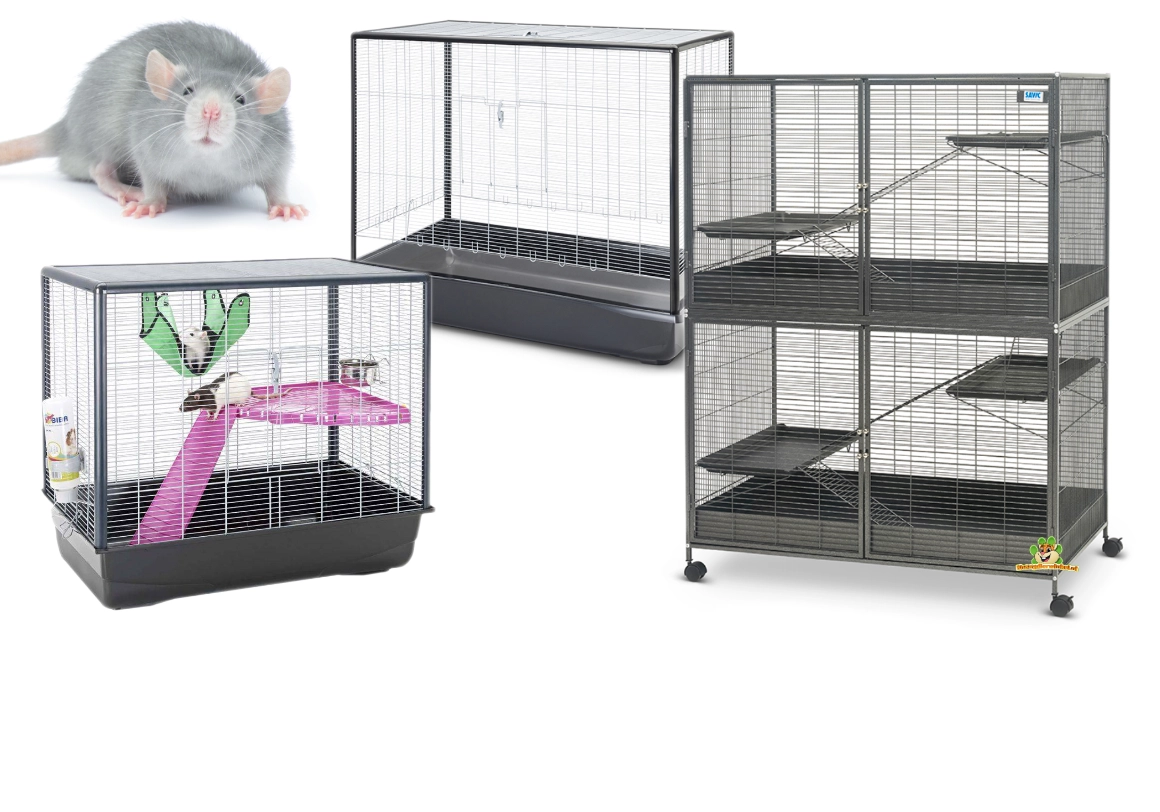 A rat cage is the foundation of your rats' daily living environment. Rats are social, intelligent, and active animals that want to climb, rest, sleep together, create routes, forage, and explore their cage. Therefore, you choose a rat cage not only based on size, but especially on usable space, ventilation, safe bar spacing, ease of cleaning, and layout.
At DRD Knaagdierwinkel®, we look at rat cages from the perspective of behavior, safety, and daily use. DRD selects products and advice not only based on whether they are “big enough,” but primarily on product fit: does the cage suit social rats, sensitive airways, safe routes, rat hammocks , tunnels and tubes , platforms and ladders , low-dust rat bedding , toilets, pee mats, and Ratscaping ? This way, you choose a rat cage that not only looks good but also truly works for your animals and for you.
✓ In short: for two rats, choose a minimum of 100 × 50 × 70 cm; larger is preferable, especially with a larger group or rich decor.
✓ Pay attention not only to height, but also to floor space, ventilation, bar spacing, large doors, and safe routes.
✓ A rat cage is only complete with hammocks, platforms, tunnels, litter boxes, pee pads, feeding areas, and daily enrichment.
Quick links:
Why a good rat cage? · What can you find here? · Size & guidelines · Choosing a cage type · Ventilation & bars · Setting up a rat cage · Hygiene · Safety · Useful shopping routes · FAQ
Space for group animals
Rats should live together. A good cage provides space to be together and to be able to avoid each other.
Make good use of height
With platforms, ladders, tunnels, and hammocks, you make height safely usable as a route and resting place.
Keeping it clean practically
Large doors, good ventilation, toilets, and urinals make daily maintenance much easier.
Why a good rat cage is important
A rat cage is not a temporary storage place, but the permanent living space where your rats sleep, eat, drink, climb, play, groom each other, and rest. Because rats are social animals, the cage must provide enough space for multiple animals at the same time. They must be able to seek each other out, but also be able to quietly move aside.
A cage that is too small, too crowded, or difficult to keep clean quickly causes problems in practice. Think of too few resting places, dirty urine spots, hard-to-reach corners, insufficient ventilation, or unsafe trapping routes. A good rat cage, on the other hand, helps keep care manageable and gives your rats more choices every day.
A good rat cage helps with
✓ Living together with conspecifics without too much pressure in one place.
✓ Climbing, route making, and safe use of heights.
✓ Create multiple sleeping areas, rest zones, and escape routes.
✓ Logically combine floor covering, toilets, and pee pads.
✓ Make daily checks, cleaning, and enrichment easier.
Read more: Rat cage buying guide · What do you need for rats?
What can you find in this Rat Cages category?
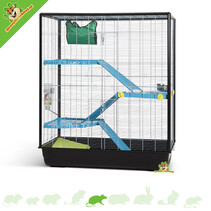
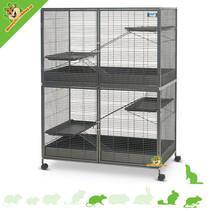
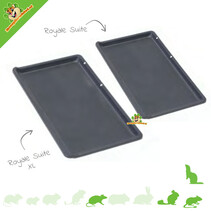
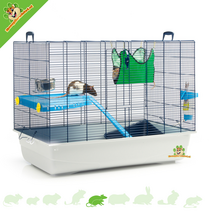
In this category, you will find complete rat cages and practical parts to make a rat cage more usable. Think of spacious cages with multiple levels, XL enclosures, models with plexiglass parts to prevent litter, removable platforms, ladders, wheels, and replacement parts.
Some cages are particularly suitable as a spacious base for a small group, while other models offer plenty of height and extra possibilities for hammocks, tunnels, and platforms. Components such as detachable platforms and wheels are handy when you want to maintain, expand, or make an existing cage more practical.
Assortment in this category
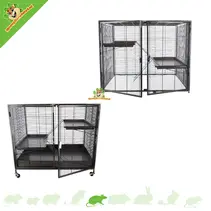
✓ Multi-level rat cages: handy for climbing, resting places, and vertical routes.
✓ XL rat cages: suitable for larger groups or extra rich furnishings.
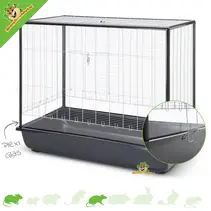
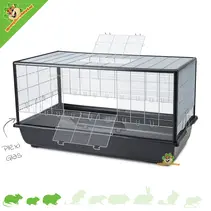
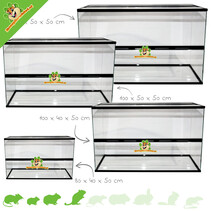
✓ Plexi variants or enclosure: practical against throwing out litter, with extra attention to ventilation.
✓ Separate platforms and ladders: to make routes safer and more convenient.
✓ Parts and upgrades: such as wheels or replacement parts for maintenance and ease of use.
Which size rat cage do you choose?
For two rats, a minimum of 100 × 50 × 70 cm (length × width × height) is recommended. Additional floor space is required for each extra rat. Use this size as a lower limit, not as an ideal. Larger is preferable, especially when keeping multiple rats or wanting to furnish the cage richly with hammocks, platforms, tunnels, litter boxes, and foraging areas.
Do not focus solely on the height. Rats enjoy climbing, but they also need horizontal space to walk, pass each other, and use different zones. A tall cage without safe staging areas is less pleasant than a cage where both height and floor space are well utilized.
Assessing size in practice
✓ Is the cage for two rats at least 100 × 50 × 70 cm?
✓ Is extra floor space available if there are more rats?
✓ Can your rats pass each other without constantly blocking the same route?
✓ Do multiple hammocks, tunnels, toilets, and feeding areas fit without everything being full?
✓ Is there free movement space left next to all the furnishings?
Which type of rat cage suits your situation?
Not every rat cage offers the same benefits. A wire cage provides plenty of ventilation and options for hanging hammocks, tunnels, and platforms. A model with plexiglass sections can help keep bedding better contained within the cage, but requires extra attention to air circulation and cleaning.
So don't choose based solely on appearance. Consider your rats, your space, and your care routine. Can you easily reach everything? Can you clean the bottom tray easily? Can you safely hang hammocks? Can you logically connect multiple levels? A practical cage makes daily care much more pleasant.
Bar cage
✓ Plenty of ventilation.
✓ Handy for hammocks, tunnels, and accessories.
✓ Horizontal bars can help with climbing.
✓ Pay attention to bar spacing, doors, and sturdy locks.
Plexi or higher base
✓ Helps prevent throwing out of bedding.
✓ Can be pleasant for messy zones or Ratscaping.
✓ Pay extra attention to ventilation and moisture.
✓ Clean wet spots on time.
Ventilation, bar spacing and airways
Rats have sensitive airways. Therefore, ventilation, low-dust bedding, and hygiene are very important. A cage with good air circulation helps prevent urine fumes, moisture, and odor from accumulating too quickly. With plexiglass or solid parts, pay extra attention to ensure the cage does not become stuffy or damp.
The bar spacing must be suitable for the rats living inside. Young, small, or slender rats can more easily get through bars that are too wide. Therefore, always check the product specifications and look at the doors, corners, roof, bottom tray, and openings around accessories.
Ventilation and grille check
✓ Does the cage have sufficient air circulation?
✓ Do urine odor and moisture not linger in sealed parts?
✓ Is the bar spacing suitable for young, small, slender, or adult rats?
✓ Do doors and corners close securely enough?
✓ Do you use low-dust bedding that puts minimal strain on the respiratory system?
Read more: Rat bedding selection guide · Rat health signs
Setting up a rat cage: routes, rest, and enrichment
The cage is the foundation, but the layout makes all the difference. Think in terms of zones: sleeping, eating, drinking, toilet, climbing, routes, foraging, and resting. Don't put everything in one place, but distribute functions throughout the cage. This way, your rats can choose where they want to be, and there is less pressure on one favorite spot.
Use hammocks as sleeping areas as well as a soft intermediate layer. Combine platforms and ladders with tunnels or tubes so that rats can safely move from top to bottom. Additionally, add foraging products, gnawing material, and optionally a digging or sniffing zone. A rat digging box is not a sand bath; therefore, do not use chinchilla sand or fine sand intended for rats.
Basic setup for a rat cage
✓ Multiple hammocks and resting spots, preferably at different heights.
✓ Platforms, ladders, tunnels, and tubes as safe routes.
✓ Houses or hiding places where rats can retreat.
✓ Food bowls, drinking bottles, or water bowls in easily accessible places.
✓ Toilets and urinals at designated urination or rest areas.
✓ Foraging products, gnawing material, and Ratscaping for a daily challenge.
Read more: Ratscaping for beginners · Rat burrow selection guide
Clean and keep the rat cage fresh
Rats mark their territory and often have designated urination spots. That is normal. Therefore, you don't achieve a fresh cage by constantly making everything completely odorless, but by working smartly with litter boxes, pee pads, spot cleaning, and easily washable parts.
Pay particular attention to wet bedding, urine stains on platforms, dirty hammocks, old food remnants, and ventilation. Wash textiles such as hammocks and baskets regularly and let everything dry thoroughly before putting them back. Clean the cage more thoroughly when necessary, but keep the routine manageable.
Hygiene in the rat cage
✓ Remove wet spots and old food residues daily.
✓ Place toilets at designated urination and defecation spots.
✓ Use pee pads on platforms or favorite resting spots.
✓ Wash hammocks and fabric parts on time.
✓ Check if ventilation, substrate, and cleaning routine work well together.
Read more: Cleaning a rat cage · Litter training rats
Safety with a rat cage
A rat cage must be sturdy, safe, and logically arranged. Regularly check bars, doors, latches, platforms, ladders, hanging points, and textiles. Rats are curious and may gnaw, pull, test, and try to squeeze through small openings.
Also pay attention to trapping routes. Height is valuable, but only when rats can safely move from level to level. Therefore, use platforms, hammocks, tunnels, and ladders as intermediate stations. Place heavy components securely and avoid loose clips, sharp edges, or long frayed edges on textiles.
Safety check
✓ Are the doors, latches, and bars sturdy and properly fitted?
✓ Are platforms, ladders, tunnels, and hammocks securely attached?
✓ Are there no sharp edges, loose clips, fraying, or pinching?
✓ Are high routes interrupted by safe intermediate stations?
✓ Is the cage easily accessible enough for daily inspection and cleaning?
Running wheel in a rat cage?
A running wheel is not a standard staple for rats, unlike for hamsters. Rats benefit most from space, climbing, tunnels, running out, foraging, and social interaction. If you do wish to use a running wheel, choose only a model that is large enough, has a solid track, and ensures the back and tail are not bent unnaturally.
For many rats, safe routes, hammocks, tunnels, platforms, foraging items, and run areas are more valuable than a wheel. Therefore, view a running wheel as a possible addition for the right situation, not as a replacement for space and enrichment.
Be careful with exercise wheels
✓ Only use if the wheel is large enough for a natural posture.
✓ Choose a closed runway without open bars or dangerous openings.
✓ Check if your rat is using the wheel safely.
✓ Never use a wheel as a substitute for space, run-out, and enrichment.
Checklist: Is this rat cage right?
Use this checklist when buying or redecorating a rat cage. This way, you consider not only the external dimensions, but also safety, usability, and daily care.
Rat cage checklist
✓ The cage for two rats is at least 100 × 50 × 70 cm, preferably larger.
✓ Additional floor space is available for more than two rats.
✓ The bar spacing is suitable for young, small, slender, or adult rats.
✓ The cage has sufficient ventilation and no stuffy, damp zones.
✓ Height has been made safely usable with platforms, ladders, tunnels, and hammocks.
✓ There are multiple resting places, routes, feeding places, and drinking places.
✓ Toilets, pee pads, and bedding fit logically into the cleaning routine.
✓ The cage remains clear enough for daily checks.
Useful shopping routes for rat cages
A rat cage works best as part of a complete setup. Therefore, combine the cage with products for sleeping, routes, hygiene, food, water, and enrichment.
Toilets & urinals
For urine stains, reducing odor, and making cleaning easier.
Read more about rat cages and setup
Do you want to determine which cage and setup suit your rats first? Then also read our information pages on choosing a cage, bedding, Ratscaping, cleaning, and the complete rat checklist.
Rat cage buying guide · What do you need for rats? · Rat bedding buying guide · Ratscaping for beginners · Cleaning a rat cage
Frequently asked questions about rat cages
What is the minimum size a rat cage needs to be?
For two rats, a minimum of 100 × 50 × 70 cm (length × width × height) is recommended. Additional floor space is required for each extra rat. Consider this a lower limit: larger is preferable, especially if you want to furnish the cage richly.
Is a tall rat cage better?
Height is valuable because rats enjoy climbing and using different levels. However, that height must be safely usable with platforms, ladders, tunnels, and hammocks. Height does not replace good floor space.
What should you look for when buying a rat cage?
Pay attention to size, ventilation, bar spacing, doors, ease of cleaning, sturdy latches, and whether you can safely set up the cage with multiple routes, resting places, feeding areas, and toilets.
What bar spacing is suitable for rats?
That depends on your rats. Young, small, or slender rats need a safer, finer bar spacing than large adult rats. Always check the product specifications and pay attention to openings at doors, the roof, and the base tray.
What should go in a rat cage?
Think of low-dust bedding, hammocks, houses, tunnels, platforms, ladders, food bowls, drinking bottles or water bowls, litter boxes, pee pads, foraging products, and gnawing material.
How do you set up a rat cage safely?
Create multiple routes between the ground, platforms, and hammocks. Avoid high fall points without intermediate stations and regularly check suspension points, ladders, tunnels, and fabric for sturdiness and wear.
How do you keep a rat cage fresh?
Use low-dust bedding, toilets in designated urination spots, pee pads on platforms, and daily spot cleaning. Wash hammocks and fabric parts regularly and ensure good ventilation.
Is a plexiglass rat cage useful?
Plexiglass or a high bottom tray can help prevent bedding from being thrown out. However, with solid sections, pay extra attention to ventilation, moisture, and urine odor, as rats have sensitive airways.
Do rats need a running wheel?
No, a running wheel is not a basic product for rats. Rats primarily need space, safe routes, exercise areas, tunnels, hammocks, and foraging activities. Only use a wheel if it is large enough and safe.
Buy a rat cage at DRD Knaagdierwinkel®
At DRD Knaagdierwinkel®, you will find rat cages and accessories suitable for pet rats as social, intelligent, and active animals. We not only help you choose a cage but also understand how to set it up safely, practically, and comfortably with routes, resting places, hygiene, and enrichment.
✓ Rat cages, XL enclosures, and cage parts neatly organized together
✓ Selection guide for size, ventilation, bar spacing, layout, and hygiene
✓ Direct routes to hammocks, tunnels, platforms, bedding, toilets, and Ratscaping
✓ Extra attention to sensitive airways, low-dust bedding, and good ventilation
✓ Specialist since 2011
✓ Delivered from our own stock
